

Panel Upgrades for Houses That Have Outgrown Their Service
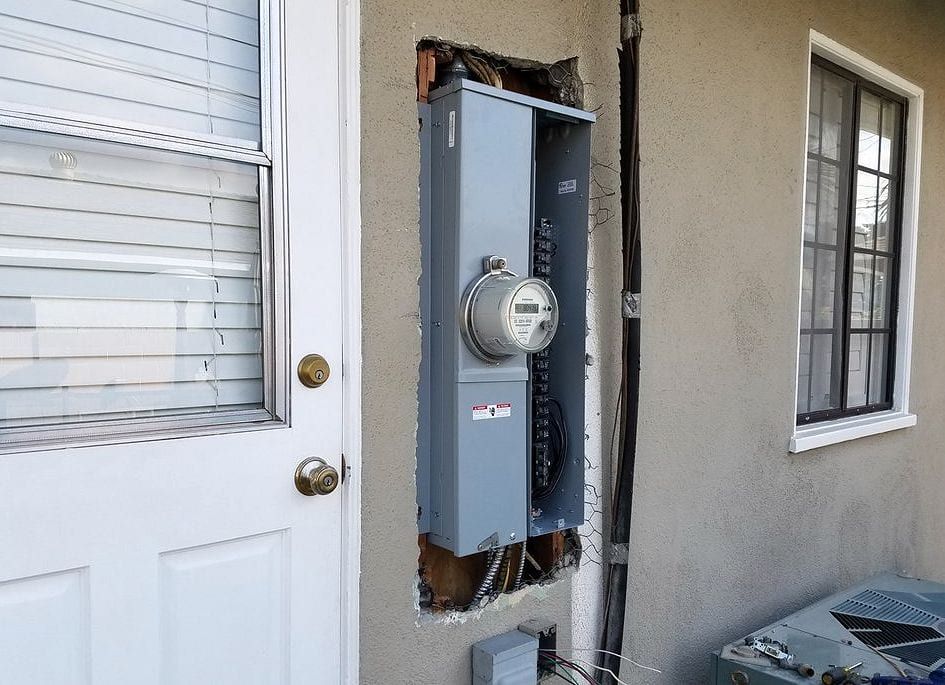
Most of our calls in San Gabriel are for panel upgrades. Many homes here are decades old and still run on small panels or fuse boxes that can’t keep up with air conditioners, electric ranges and car chargers, so breakers trip and owners need more capacity. We replace the old panel, update the grounding and size the new service to what the house actually uses.
Signs Your Panel May Be Undersized
A panel rarely fails all at once. It tells you it’s running out of room in small ways first. Here’s what to watch for and what each sign usually means.
| Sign | What it suggests | What to do |
|---|---|---|
| Breakers trip when the AC, dryer or oven run together | The house draws more than its circuits or service can carry | Note which loads were on; have the panel and load checked |
| Lights dim when the air conditioner starts | A heavy start-up load on a small or tired service | Mention it when you call; we test under load |
| No empty spaces, or doubled-up breakers everywhere | No room left for a new circuit | Count the open spaces (steps below) before adding anything |
| Screw-in fuses instead of breakers | An original fuse box, often with too few circuits for today | Plan a replacement; never upsize a fuse to stop it blowing |
| A warm panel door, buzzing or a burnt smell | A connection overheating inside | Call now and stop using the affected circuits |
| An older Zinsco or Federal Pacific panel | Brands widely known for breakers that may not trip as they should | Have it inspected and talk about replacing it |
How to Read Your Panel Label and Count Open Breaker Spaces
You can learn a lot about your panel without touching anything inside it. Before you start, read the safety notes below.
Safety Notes
- Open only the outer door. Never unscrew or remove the inner cover (the dead front) that the breakers poke through.
- Stand on a dry floor, keep your hands dry and don’t touch anything inside but the door.
- If the panel is warm, buzzing, rusty or smells burnt, close the door and call instead.
- Find the panel. In San Gabriel houses it’s usually on an outside wall by the meter, in the garage, or in a hallway closet in older homes.
- Look at the biggest breaker, usually at the top, marked “Main.” The number on its handle (60, 100, 125, 200) is the size of the service it protects.
- Find the label on the inside of the door or the side of the box. Look for the panel’s bus rating in amps and the maximum number of circuits or breaker spaces.
- Count the breakers, then count the blank filler plates in the cover. Each blank is an open space; a thin “twin” breaker filling one space counts as two circuits.
- Take a photo of the label and one of the open door, and email them to us when you book. They help us come prepared.
Reasons Homeowners Upgrade
- New appliances: central air, a heat pump, an electric range or an electric dryer.
- An EV charger, which needs a large circuit of its own.
- An addition, a converted garage or a kitchen remodel that adds circuits.
- Frequent trips that keep coming back after every repair.
- An original fuse box or a panel with no room left.
What the Upgrade Itself Involves
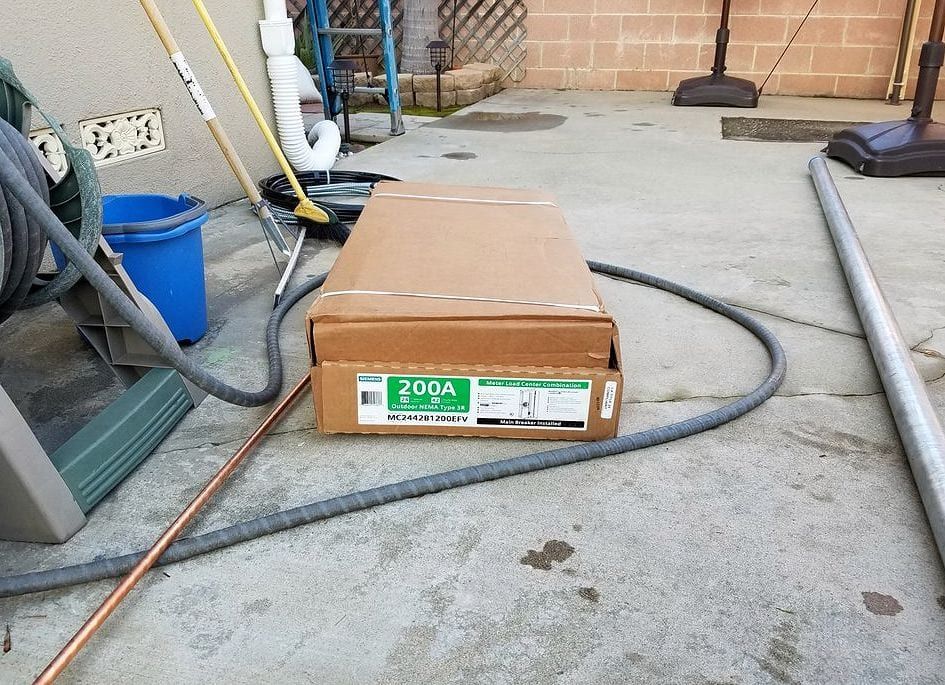
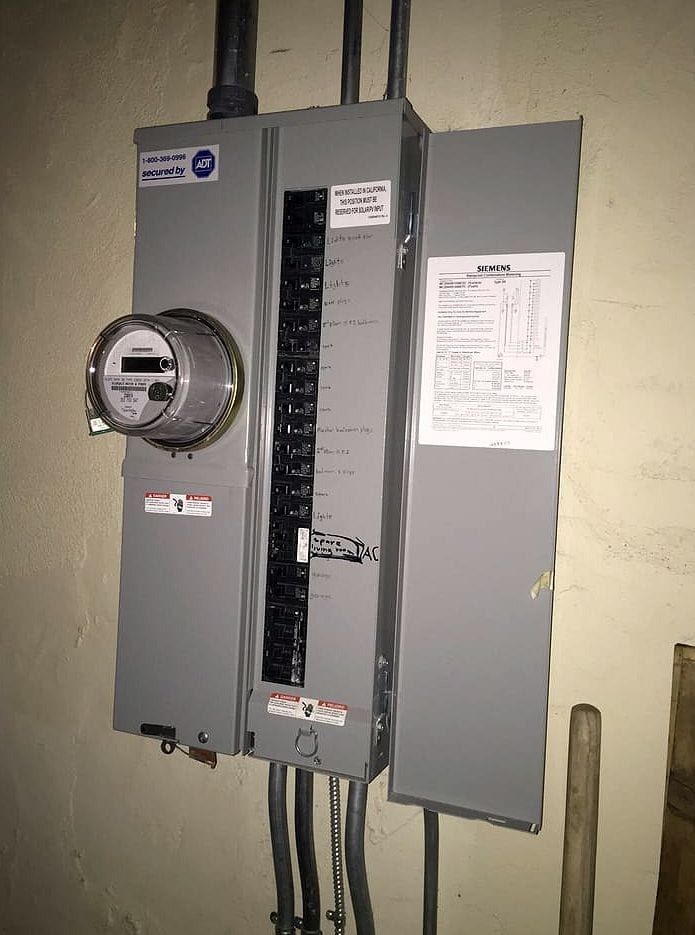
An upgrade starts with how much the house actually uses: the size of the home, the air conditioning, the range, the dryer and anything you’re planning to add. That decides the size of the new panel and service, so you don’t end up with one that’s too small again, or bigger than you need.
On the day of the work, the power is off while the old panel comes out and the new one goes in. The grounding is brought up to date, every circuit is moved over and labeled, and the old fuses or worn breakers are gone. A panel replacement usually needs a permit and an inspection from the city, and the utility, Southern California Edison here, has to disconnect and reconnect the service.
Comparing options before you commit? Our panel upgrade buyer’s guide explains what drives the cost and the questions to ask any electrician.
Rey.. He came out to perform an electrical panel upgrade to 200amps. He knew exactly what needed to be done and he did it. His guys are nice and polite. He had everything done in 5 hours. The electrical inspector came out and approved his work. I would use him again and again.. Thank you Rey!!!
Panel Upgrade Questions
Do I need a 200-amp panel?
Not always. Many houses here are well served by 200 amps once air conditioning, an electric range or a car charger are in the picture, but the right size comes from what your home uses and what you plan to add. We work it out from your appliances rather than picking a number first.
How long will the power be off?
For a typical house, the power is off for most of a working day while the panel is swapped and the utility reconnects. We’ll tell you when to expect it off and what to unplug beforehand.
Can the panel be moved to a better spot?
Sometimes. Moving a panel or the meter adds work and may need the utility’s approval, so it’s worth asking about when we first look at the job.
Is a subpanel an option instead?
A subpanel adds spaces for new circuits, which helps when the panel is full but the service has room to spare. It doesn’t add capacity. If the house is already drawing close to what the service allows, a subpanel won’t fix the tripping.