

EV Charger Installation for Garages and Driveways
A home charger is one of the biggest loads a house can add, and it often runs for hours at a time. Before anything gets mounted on the wall, we check that your panel can carry it, then run a dedicated circuit to where you park. Here’s what to know before you book.
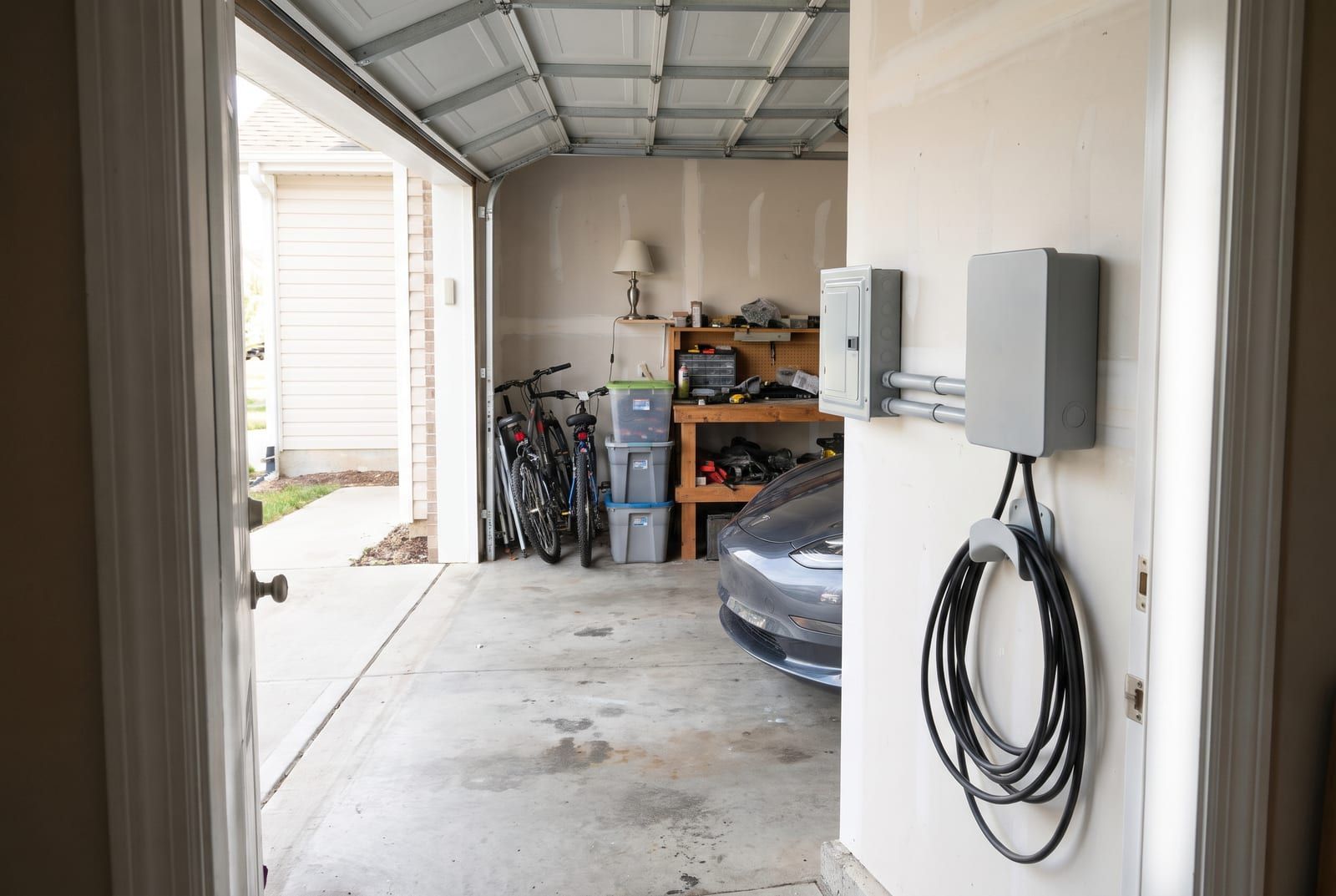
Charging Levels
Most owners start with the cord that came with the car and move to a Level 2 charger once they see how long Level 1 takes.
| Level | Typical use | Circuit it needs | What to check at home |
|---|---|---|---|
| Level 1 | Overnight top-ups for short daily driving | An ordinary 120-volt outlet, ideally on a circuit of its own | The outlet’s condition and what else shares the circuit |
| Level 2 | Daily charging for most commutes, a full charge overnight | A dedicated 240-volt circuit sized to the charger, often 40 to 60 amps | Panel capacity, open spaces, and the run from the panel to the car |
| DC fast | Public stations and businesses, not homes | Large commercial service | Not a home option |
Before You Book a Charger Installation
- Your parking spot: where the car sits each night, and which side its charge port is on.
- Distance to the panel: the path the wire would take, along walls and through the garage or attic, not a straight line.
- Panel capacity: the main breaker size and the open spaces (our panel upgrade page shows how to read them).
- The charger model: hardwired or plug-in, its amperage, and whether it’s rated for outdoor use if it’ll sit in the driveway.
- Wi-Fi reach: if the charger has an app, whether your signal reaches that wall.
How to Find Where Your Panel Is and How Far the Car Parks From It
- Find your main panel. In most San Gabriel houses it’s on an outside wall next to the meter or inside the garage.
- Park the car where it sits overnight and note where its charge port ends up.
- Pick the spot for the charger on the wall or a post, within reach of the port with the cable it comes with.
- Measure the route the wire would follow from the panel to that spot, along the walls and around doors. Pacing it out is close enough.
- Note what’s in between: finished drywall, stucco, the driveway or an attic.
- Take a photo of the panel with its door open and one of the parking spot, and email them to us when you book.
When the Panel Is the Real Question
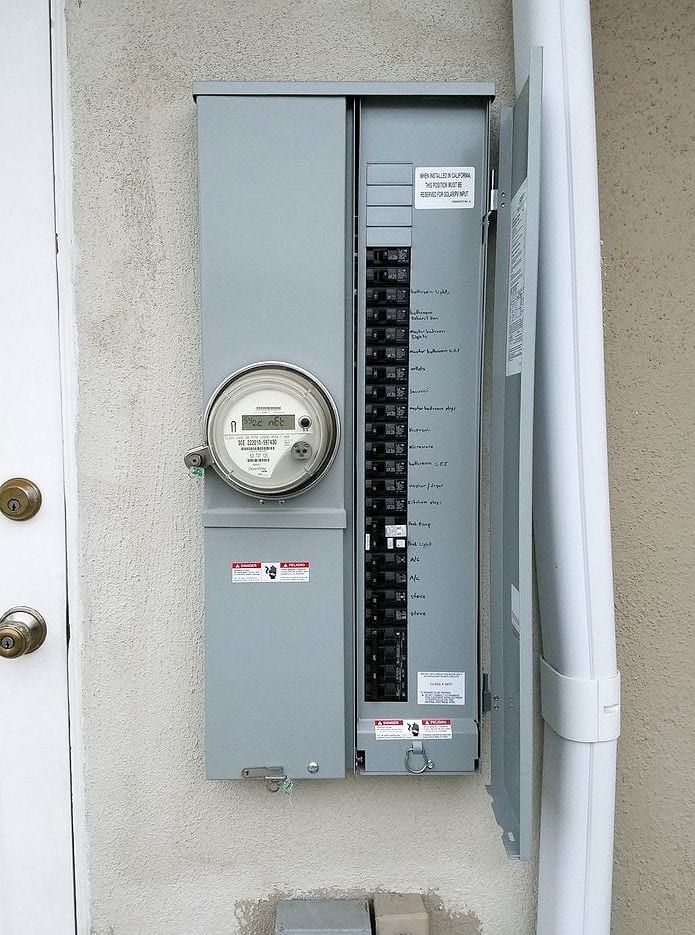
A Level 2 charger often draws as much as a central air conditioner, for hours at a stretch. On a 100-amp panel that already runs AC, a dryer and an electric range, there may simply be no room. Sometimes a smaller charger setting or load management solves it. Other times the right answer is a bigger panel, and we’ll tell you which it is before any wire is pulled.
The good news: many houses that get a panel upgrade for a charger end up with room for whatever comes next, like an induction range or a heat pump.
I found Rey from yelp to install 240v fast charging station at home for my new electric vehicle. He showed up right on time and professionally installed it and working perfectly. His fee was reasonable. Rey is a responsible man who will take care of his work. I'm very pleased with his service. Highly recommended!
Home Charging Questions
Is a regular outlet enough to charge my car?
For short daily driving, often yes, as long as the outlet is in good shape and nothing else heavy shares the circuit. If you drive a lot or want a full charge overnight, Level 2 is the practical choice.
Should I get a plug-in or a hardwired charger?
Both work. A plug-in unit on a 240-volt outlet can come with you if you move. A hardwired unit avoids a heavy-use outlet and suits outdoor spots. We’ll talk it through with the model you have in mind.
Can the charger go outside in the driveway?
Yes, with a charger rated for outdoor use and the wiring run and protected for it. In our dry summers and wet winters, the rating matters.
We have two electric cars. Do we need two chargers?
Not always. Some chargers can share one circuit and split the power between two cars. Whether two separate circuits fit depends on your panel’s capacity.