

Panel Upgrade Buyer’s Guide: Options and What Drives the Cost
“You need a new panel” can mean several different jobs, and they don’t cost the same. This guide lays out the usual options, what each one involves and what pushes the price up or down, so you can compare quotes on the same terms. We don’t list prices here: every house is different, and the drivers below are what make the difference.
Options Comparator
Choose your priorities
Pick what matters to you, then press the button to see how each option fits.
Upgrade Options
| Option | Best for | What it involves | Main cost drivers |
|---|---|---|---|
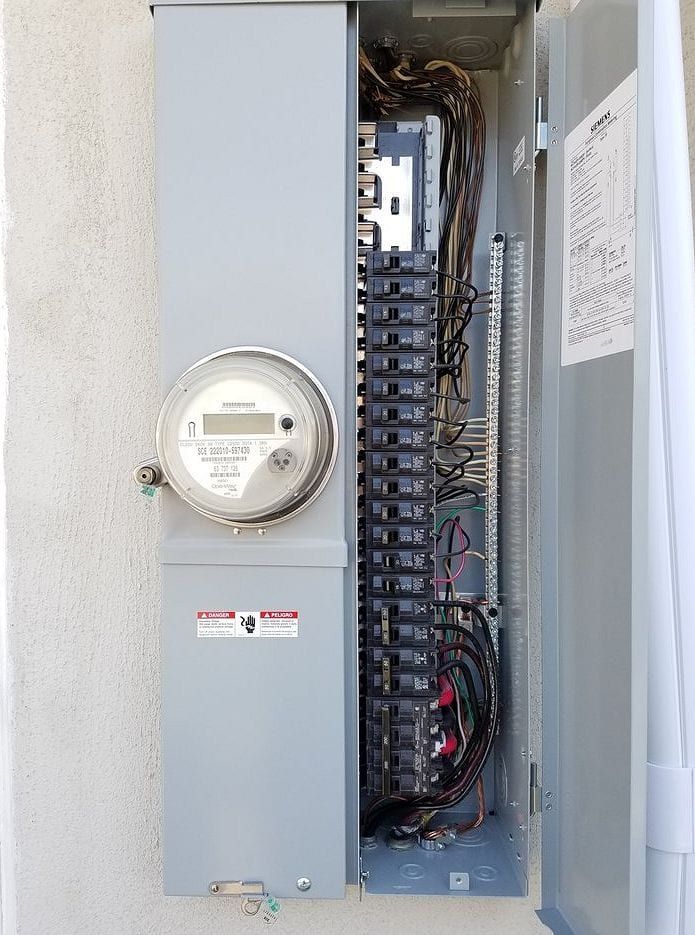
| Panel replacement, same service size | An old, failing or problem panel on a service that’s big enough | A new panel in place of the old one, circuits moved over, grounding updated | Panel size, condition of the old circuits, grounding work |
| Service upgrade | Houses that need more capacity: AC, a range, an EV charger | A larger panel plus a new meter base and service entrance, coordinated with the utility | Service size, meter and panel location, the mast or underground feed, permit |
| Subpanel | A full panel on a service that still has room | A second panel fed from the main, often in a garage or an addition | Distance from the main panel, number of new circuits |
| Load management or circuit fixes | One overloaded circuit, or a charger on a tight panel | Moving loads, adding a circuit, or a device that limits the charger when the house is busy | How many circuits change, the device chosen |
What Affects Cost
- Panel size: a larger panel and service cost more in parts, and may need a new meter base.
- Wiring condition: brittle, cloth-covered or ungrounded circuits may need work before they move to a new panel.
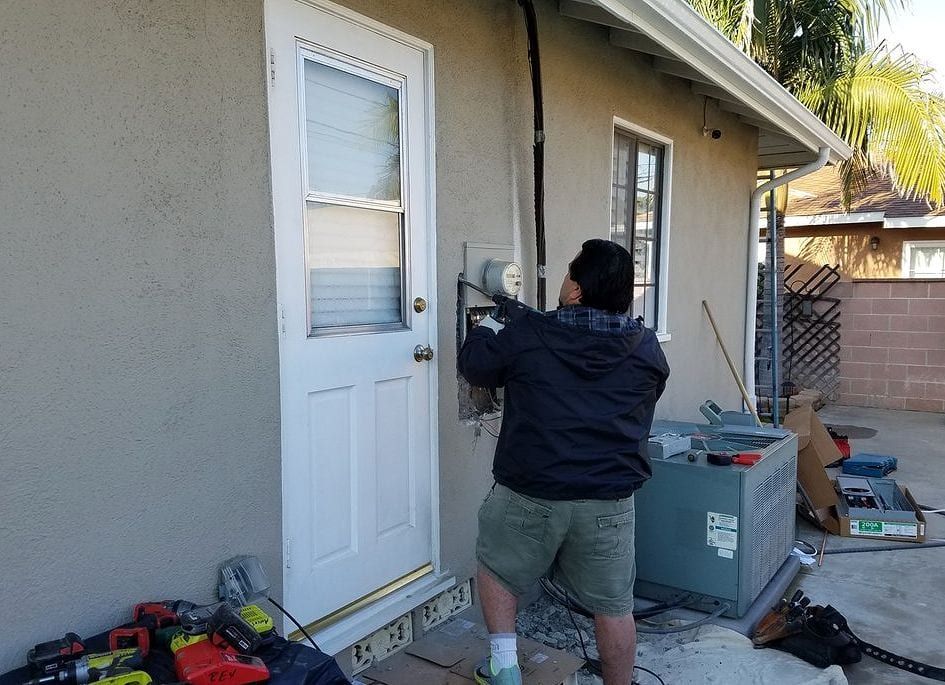
- Meter and panel location: keeping the panel where it is costs less than moving it; a cramped closet or a stucco wall adds labor.
- Permit needs: a panel or service change usually needs a city permit and an inspection.
- Added circuits: a charger, a range or AC on new circuits adds wire, breakers and time.
Questions to Ask Any Electrician
- What size panel and service do you recommend, and how did you arrive at it?
- Does the quote include the permit, the inspection and coordinating with the utility?
- Is the grounding being updated as part of the job?
- Will every circuit be labeled in the new panel?
- How long will the power be off, and what should we unplug?
- What happens to the wall around the panel after the swap?
- Is the new panel sized for the charger, range or addition we’re planning?
Reading Two Quotes Side by Side
Quotes that look far apart often describe different jobs. One may be a panel swap at the same size, another a full service upgrade with a new meter base. Line them up by the option they describe, the panel size, whether the permit and grounding are included and what happens to the wall. Then the numbers start to make sense. For the signs that point to an upgrade in the first place, see our panel upgrades page.
Buyer’s Questions
Is a bigger panel always better?
Not always. It should match what the house uses plus what you plan to add. Going bigger than that costs more without making anything safer.
Can I add a subpanel instead of upgrading?
If the service has capacity left and the problem is only a lack of spaces, yes. If breakers trip because the house draws too much, a subpanel won’t help.
Should I replace a fuse box even if it works?
Old fuse boxes usually have too few circuits for today’s appliances, and they invite oversized fuses. Most owners replace them when they add a big appliance or buy the house.